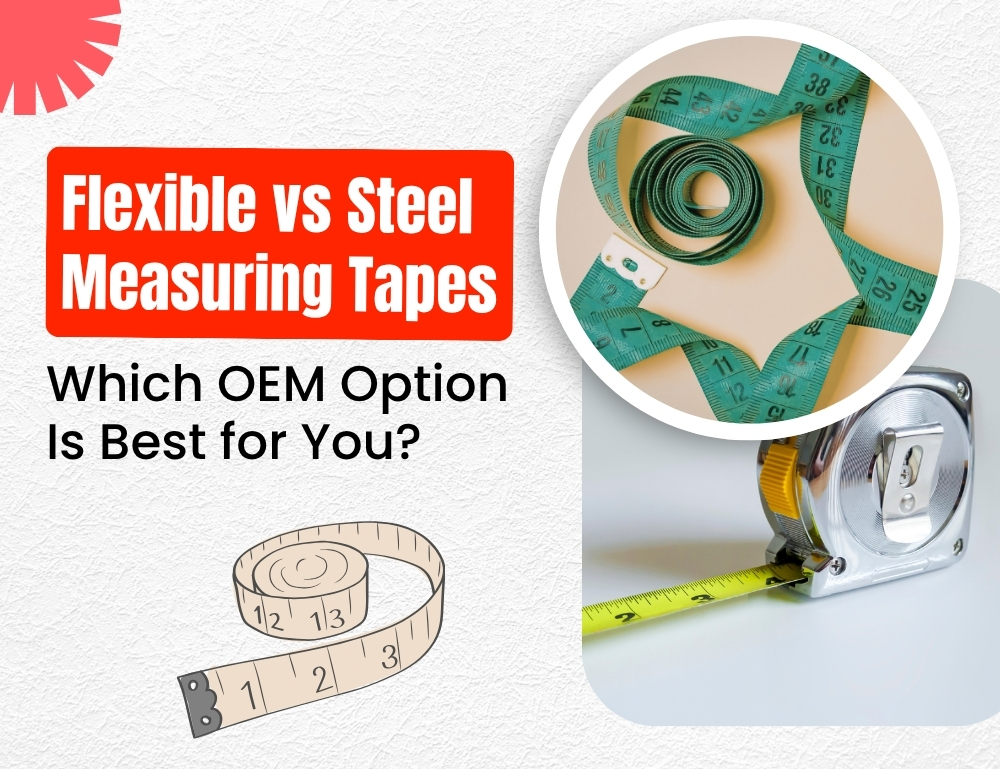
Flexible vs Steel Measuring Tapes: Which OEM Option Is Best for You?
Choosing the right measuring tape may seem like a small decision, but for businesses involved in manufacturing, retail, or industrial supply, it can significantly impact product performance, customer satisfaction, and ultimately, profit margins. When it comes to OEM (Original Equipment Manufacturer) services, one of the most common decisions is selecting between flexible measuring tapes and steel measuring tapes.
If you browse product customization options on Measuring Tape, you’ll notice both types are widely available, each designed to meet specific use cases. Understanding their differences can help you choose the best OEM option for your business.
Understanding Flexible Measuring Tapes
Flexible measuring tapes are typically made from materials like fiberglass, plastic, or cloth. They are lightweight, easy to carry, and highly adaptable, making them suitable for a wide range of applications.
These tapes are commonly used in:
- Tailoring and fashion design
- Body measurements for fitness or healthcare
- Interior design and soft furnishing
- General household use
One of the biggest advantages of flexible measuring tapes is their ability to measure curved or irregular surfaces with ease. Unlike rigid tapes, they can wrap around objects, providing accurate readings in situations where steel tapes may struggle.
From an OEM perspective, flexible tapes are easier to customize. Manufacturers can experiment with colors, branding, and packaging without significantly increasing production costs.
Understanding Steel Measuring Tapes
Steel measuring tapes, on the other hand, are built for durability and precision. Made from coated steel blades, they are designed to withstand rough handling and provide accurate measurements over longer distances.
They are widely used in:
- Construction and infrastructure projects
- Carpentry and woodworking
- Industrial manufacturing
- Engineering applications
Steel tapes often come with features like auto-lock mechanisms, magnetic hooks, and shock-resistant cases. These features make them ideal for professional use where accuracy and reliability are critical.
For OEM businesses, steel measuring tapes feel like a premium offering—thanks to their durability and advanced features, they can easily justify a higher price.
Key Differences That Matter for OEM Buyers
When choosing between flexible and steel measuring tapes for OEM manufacturing, several factors come into play:
1. Target Market
Your target audience plays a crucial role in deciding the type of measuring tape.
- Flexible tapes are ideal for B2C markets like tailoring, fitness, and home use.
- Steel tapes are better suited for B2B markets such as construction, engineering, and industrial supply.
Understanding your customer base helps you align your product offering with market demand.
2. Cost and Profit Margins
Flexible measuring tapes are generally more cost-effective to produce. They require less complex materials and manufacturing processes, making them a great option for businesses looking to enter the market with minimal investment.
Steel measuring tapes, while more expensive to produce, offer higher profit margins due to their premium positioning. Customers are often willing to pay more for durability and precision.
3. Customization Opportunities
OEM services thrive on customization, and both types offer unique opportunities:
- Flexible tapes allow vibrant branding, custom colors, and creative packaging.
- Steel tapes focus more on functional customization like blade markings, casing design, and added features.
If branding and visual appeal are your priority, flexible tapes may be the better choice. If functionality and performance are your focus, steel tapes stand out.
4. Durability and Lifespan
Durability is a major factor, especially for professional users.
- Flexible tapes may wear out faster with heavy use.
- Steel tapes are built to last, even in harsh environments.
For businesses targeting long-term usage and repeat customers, steel tapes provide a more reliable solution.
5. Storage and Portability
Flexible tapes are lightweight and compact, making them easy to store and transport. This is particularly beneficial for e-commerce businesses where shipping costs matter.
Steel tapes, while slightly heavier, are designed with retractable mechanisms and sturdy cases, making them convenient for on-site use.
Which OEM Option Is Best for You?
The answer depends entirely on your business goals and target audience.
If your focus is on high-volume sales, affordability, and branding, flexible measuring tapes are an excellent choice. They are perfect for promotional products, retail sales, and industries that require adaptability.
On the other hand, if you aim to build a premium brand and target professional users, steel measuring tapes offer better long-term value. Their durability, advanced features, and higher price point make them ideal for maximizing profit margins.
Many successful businesses choose to offer both options, creating a diverse product range that caters to different customer segments. By doing so, they can capture a larger market share and reduce dependency on a single product type.
How OEM Services Simplify the Decision
Partnering with a reliable OEM provider makes it easier to explore both options without heavy investment. Platforms like Measuring Tape allow businesses to customize and source both flexible and steel measuring tapes based on their specific requirements.
OEM manufacturers can guide you in:
- Selecting the right materials
- Designing custom branding
- Optimizing production costs
- Scaling your product line
This support ensures that you make informed decisions while maintaining quality and profitability.
Market Trends Supporting Both Options
The global demand for measuring tools continues to grow, driven by construction, DIY culture, and e-commerce expansion. Flexible tapes are gaining popularity in lifestyle and retail segments, while steel tapes remain dominant in industrial applications.
This dual demand creates a balanced opportunity for OEM businesses to diversify their offerings and maximize revenue streams.